
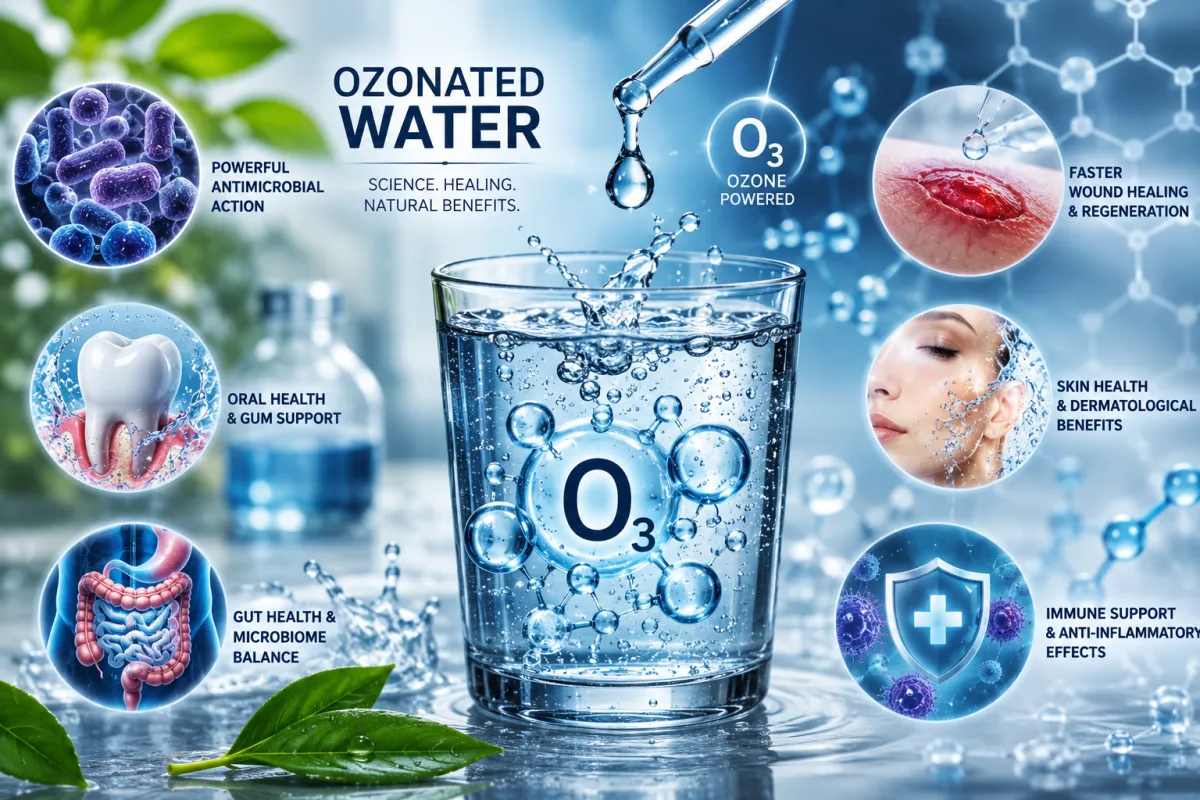
Ozonated Water Benefits: What Clinical Research Reveals About Gut Health, Wound Healing, and Immunity
Ozonated Water: What the Research Really Says About Its Clinical Benefits
Why Ozonated Water Is Getting Attention in Functional and Integrative Medicine
Over the past decade, ozonated water has gained increasing attention among healthcare practitioners, researchers, dentists, wound care specialists, and functional medicine providers. While ozone gas has long been associated with concerns about inhalation safety, ozonated water represents a very different application.
Ozonated water is simply water infused with ozone (O₃). When used appropriately, it has demonstrated antimicrobial, anti-inflammatory, wound healing, and microbiome-supporting properties across multiple areas of medicine.
In fact, ozone received Generally Recognized as Safe (GRAS) status from the U.S. Food and Drug Administration for direct food contact applications in 2001, and its use has since expanded into food safety, dentistry, wound care, and clinical research.
Today, researchers are exploring how ozonated water may support oral health, gut health, immune function, chronic wound healing, dermatological conditions, and even certain oncology applications.
How Ozonated Water Works
Ozone consists of three oxygen atoms rather than the two oxygen atoms found in regular oxygen.
When ozone is dissolved in water, it creates a highly reactive solution that interacts with bacteria, viruses, fungi, and damaged tissues.
This interaction produces a controlled oxidative stimulus.
While excessive oxidative stress can be harmful, low therapeutic levels can trigger what researchers call a hormetic response. This mild stress encourages the body to activate antioxidant defenses, support immune regulation, and improve cellular resilience.
One of ozone's most interesting characteristics is its ability to disrupt microbial cell walls so effectively that microorganisms are unable to develop resistance. Unlike antibiotics and many disinfectants, ozone works through direct oxidation rather than targeting a single biological pathway.
Another advantage is that ozone naturally breaks down into oxygen, leaving no chemical residue behind.
Antimicrobial Benefits of Ozonated Water
One of the most extensively studied uses of ozonated water is infection control.
Research has shown effectiveness against:
Staphylococcus aureus
Pseudomonas aeruginosa
Streptococcus mutans
Candida albicans
Multiple drug-resistant organisms
In laboratory studies, ozonated water has demonstrated the ability to eliminate many bacterial and yeast strains within seconds of contact.
This broad-spectrum activity has made it particularly attractive in dental settings, wound care, food safety, and healthcare sanitation.
Ozonated Water and Biofilms
Biofilms are one of the biggest challenges in chronic infections.
These protective communities allow bacteria to hide from antibiotics and the immune system.
Studies suggest ozonated water may help disrupt biofilms, particularly those associated with oral pathogens such as Streptococcus mutans, one of the primary contributors to tooth decay.
Researchers have also found enhanced antibiofilm effects when ozonated water is combined with specific wavelengths of light therapy.
Oral Health Applications
Dentistry represents one of the most well-established clinical applications for ozonated water.
Periodontal Disease
Clinical trials have shown that ozonated water can significantly reduce bacterial populations associated with periodontal disease.
Research comparing ozone therapy with photodynamic therapy found both approaches produced meaningful improvements in gum health and microbial control.
This suggests ozonated water may serve as an effective adjunct to conventional periodontal treatment.
Gingivitis
Several randomized controlled trials have investigated ozonated water for gingivitis management.
While results vary, many studies report reductions in gum bleeding and inflammation, suggesting that ozone may support healthier periodontal tissues.
Dental Caries Prevention
Beyond gum health, ozonated water may help reduce the bacterial burden associated with tooth decay while supporting early enamel remineralization.
These findings have generated interest in ozone-based rinses and dental irrigation protocols.
Ozonated Water and Wound Healing
One of the most promising areas of research involves wound care.
Studies have shown that ozonated water may support:
Infection control
Fibroblast activity
Keratinocyte migration
Tissue regeneration
Faster wound closure
Researchers have observed positive results in both acute and chronic wounds.
Diabetic Foot Ulcers
Patients with diabetic foot ulcers often experience poor circulation and delayed healing.
Research suggests ozone therapy may stimulate important growth factors involved in tissue repair, including:
VEGF
PDGF
TGF-β
These mechanisms may help explain the accelerated healing observed in several studies.
Emerging Research on Gut Health
One of the newest and most exciting areas of ozone research involves the gut microbiome.
Recent studies suggest ozonated water may positively influence:
Gut barrier integrity
Microbial diversity
Inflammatory regulation
Intestinal healing
Sepsis and Intestinal Protection
A recent study demonstrated that ozonated water improved intestinal barrier function and reduced inflammatory damage in animal models of sepsis.
Researchers observed:
Improved tight junction function
Increased beneficial bacteria
Reduced inflammatory cytokines
Enhanced gut resilience
Irritable Bowel Syndrome
Clinical investigations have also explored ozone therapy for IBS.
Some studies report improvements in:
Microbial balance
Digestive symptoms
Intestinal transit time
Inflammation
Although more research is needed, these findings suggest ozone may influence digestive health through multiple pathways.
Skin Health and Dermatology
The skin microbiome has become an increasingly important topic in dermatology.
Research indicates that ozone therapy may support healthier microbial balance while reducing inflammatory activity.
Studies have investigated its role in:
Atopic dermatitis
Psoriasis
Chronic wounds
Skin infections
Researchers have also observed reductions in Staphylococcus aureus overgrowth, a common issue in eczema patients.
Anti-Inflammatory Effects
Beyond infection control, ozonated water appears to influence inflammatory pathways.
Research has demonstrated reductions in:
IL-6
TNF-α
NF-κB activity
At the same time, ozone may stimulate antioxidant enzyme systems that help the body respond more effectively to oxidative stress.
This combination of antimicrobial and anti-inflammatory effects may explain why ozone therapy continues to gain attention across multiple medical specialties.
What About Cancer Research?
Ozone therapy has also been studied in oncology.
While the research remains preliminary, several studies suggest ozone may influence tumor biology through oxidative mechanisms.
Researchers have reported:
Reduced tumor cell proliferation
Increased tumor necrosis
Improved oxygen delivery
Better tolerance of conventional therapies
However, oncology remains an area where caution is necessary.
Recent studies suggest ozone's effects may vary depending on dosage, treatment duration, and tumor type.
For this reason, ozone therapy should never be viewed as a replacement for conventional cancer care.
Safety Considerations
One of the most common questions patients ask is whether ozonated water is safe.
Current evidence suggests that appropriately generated ozonated water has a favorable safety profile.
Important distinctions include:
Ozone gas should not be inhaled
Ozonated water is substantially safer than inhaled ozone
Ozone naturally breaks down into oxygen
No toxic residue remains after dissipation
Potential contraindications reported in the literature include:
Pregnancy
Certain neurological disorders
Recent cardiovascular events
Specific medical conditions requiring physician supervision
As with any therapy, clinical guidance is recommended.
What the Research Tells Us
While researchers continue to investigate optimal dosing protocols and clinical applications, the overall evidence suggests that ozonated water is a promising tool in integrative healthcare.
Its combination of antimicrobial, anti-inflammatory, wound healing, microbiome-supporting, and immune-modulating properties makes it unique among therapeutic interventions.
Although more large-scale human trials are needed, the existing body of research supports continued exploration of ozonated water in oral health, wound care, gut health, dermatology, and functional medicine applications.
