
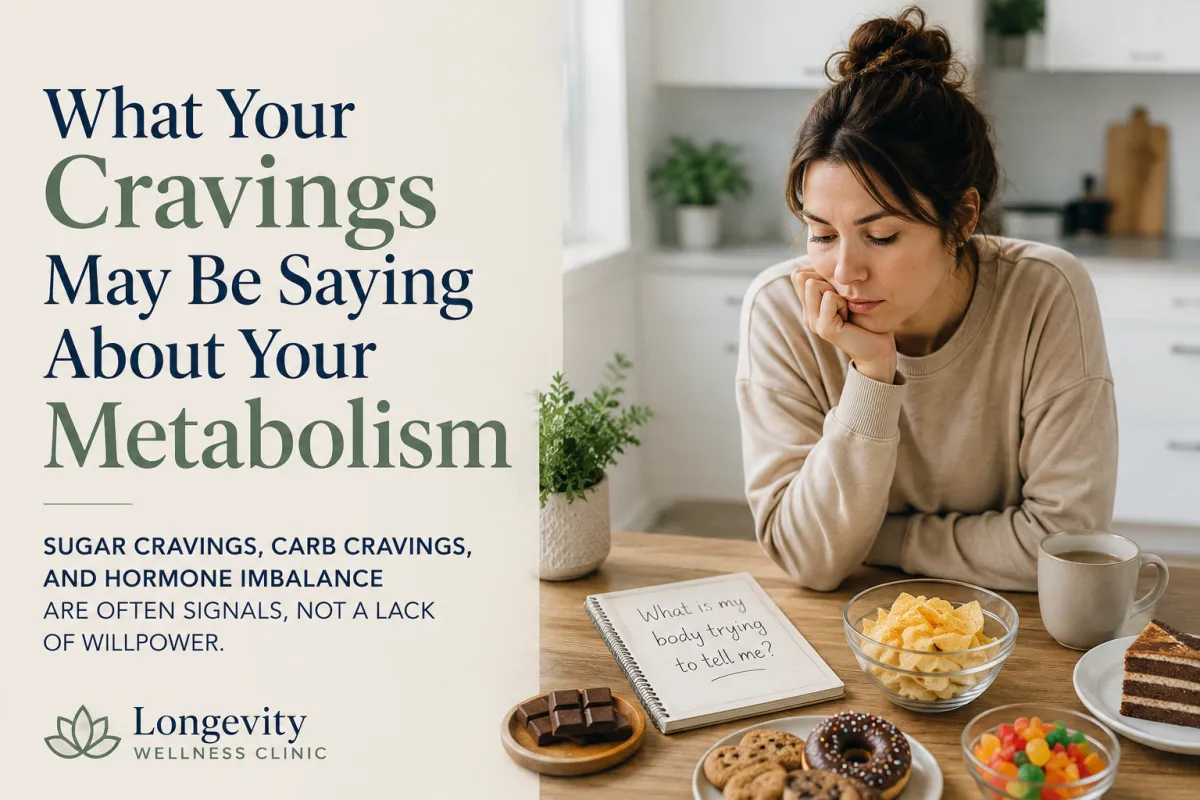
What Your Cravings May Be Saying About Your Metabolism in Lakewood Ranch
Why Sugar, Salt, and Carb Cravings Are Not Just About Willpower
Most people think cravings are simply a lack of discipline.
They assume craving sugar means they need more self-control, or craving carbs means they are “bad” at dieting.
But cravings are often much deeper than that.
At Longevity Wellness Clinic, we look at cravings differently. In many cases, cravings are not random at all. They are signals from your metabolism, hormones, nervous system, and stress response.
Your body may actually be trying to tell you something important.
And the type of cravings you experience can reveal a lot about your metabolic pattern.
Cravings Are Often a Metabolic Signal
Your body is constantly trying to maintain balance.
When blood sugar drops, stress hormones rise, or energy production becomes unstable, the brain starts looking for fast fuel.
That is when cravings begin.
For some people, it shows up as intense sugar cravings in the afternoon.
For others, it is nighttime snacking, constant hunger, salty foods, caffeine dependence, or emotional eating.
The important thing to understand is this:
Cravings are usually not the root problem.
They are the symptom of an underlying imbalance.
Why Some People Crave Sugar All the Time
One of the most common patterns we see is blood sugar instability.
When your blood sugar rises and crashes repeatedly throughout the day, your brain starts demanding quick energy.
This often creates:
Sugar cravings
Carb cravings
Afternoon energy crashes
Irritability when hungry
Feeling shaky or anxious between meals
This pattern is commonly associated with the Walrus archetype in the Decode Your Dolphin system.
The body becomes less efficient at using glucose, so it constantly searches for fast fuel.
Many people in this pattern feel frustrated because they try to avoid sugar but crave it even more.
The issue is often not a lack of willpower.
It is unstable metabolism.
The “Wired but Tired” Craving Pattern
Not all cravings come from blood sugar.
Some come from chronic stress.
When the brain and adrenal system are under pressure for too long, cortisol rhythms become dysregulated.
This can create:
Nighttime cravings
Stress eating
Emotional eating
Cravings for salty or crunchy foods
Late-night snacking even without real hunger
This is commonly seen in the Octopus archetype, where the nervous system stays overstimulated.
These individuals often feel exhausted during the day but suddenly hungry or restless at night.
Their body is searching for comfort, stimulation, or quick energy because stress signaling has become disrupted.
Why Hormones Can Change Your Cravings
Hormones also influence appetite and cravings more than most people realize.
When estrogen, progesterone, and cortisol become imbalanced, cravings often intensify.
This is especially common during:
PMS
Perimenopause
Menopause
Chronic stress states
Some people notice:
Strong chocolate cravings
Emotional eating
Increased hunger before their cycle
Sudden appetite changes
Weight fluctuations
This pattern is commonly associated with the Pufferfish archetype.
The body is not just reacting emotionally.
Hormones are actively influencing brain chemistry, blood sugar regulation, and stress signaling.
Cravings Can Also Point to Nutrient Deficiencies
Sometimes cravings are connected to what your body is missing.
For example:
Low protein intake can increase sugar cravings
Mineral deficiencies may increase salt cravings
Poor digestion can leave the body searching for more energy even after eating
This is one reason many people feel hungry shortly after meals.
The body may not be absorbing nutrients efficiently.
This pattern is commonly associated with the Manatee archetype, where digestion and nutrient absorption become weaker over time.
In these cases, the issue is not overeating.
It is undernourishment at the cellular level.
Why Restrictive Dieting Often Makes Cravings Worse
One of the biggest mistakes people make is trying to fight cravings through restriction.
They skip meals, cut calories aggressively, or remove entire food groups.
At first, this may seem helpful.
But over time, the body often responds by increasing stress hormones and intensifying cravings even more.
This is especially true in people already dealing with chronic stress or hormonal imbalance.
The body interprets severe restriction as another stressor.
Instead of calming the system, it pushes the metabolism deeper into survival mode.
What Your Cravings Might Actually Mean
The important thing is not just what you crave.
It is why.
Different craving patterns often point toward different underlying metabolic issues.
For example:
Sugar cravings may suggest blood sugar instability.
Nighttime cravings may suggest cortisol rhythm disruption.
Emotional cravings may suggest nervous system overload.
Constant hunger may suggest poor protein intake or nutrient absorption.
This is why understanding your metabolic pattern matters.
The same craving can come from very different root causes.
A Different Way to Approach Cravings
Instead of asking:
“How do I stop cravings?”
A better question is:
“What is my body trying to communicate?”
When the underlying imbalance improves, cravings often decrease naturally.
This is why sustainable change usually comes from supporting the body, not fighting it.
Simple Ways to Support Your Metabolism
Small changes can make a significant difference.
Helpful starting points include:
Eating enough protein throughout the day
Avoiding skipping meals
Stabilizing blood sugar with balanced meals
Improving sleep consistency
Reducing excessive caffeine dependence
Supporting digestion with warm, nourishing foods
These steps help the body feel safer and more stable, which often reduces cravings naturally.
Understanding Your Metabolic Archetype
Inside the Decode Your Dolphin system, cravings are viewed through metabolic archetypes rather than generic dieting advice.
Different archetypes experience cravings differently because different systems are under stress.
That is why one-size-fits-all nutrition plans often fail.
The issue is not simply the food.
It is the pattern underneath the craving.
Your Next Step
If you are struggling with cravings, emotional eating, unstable energy, or metabolism issues in Lakewood Ranch, it may be time to look deeper.
You can book a free 10 minute complimentary consultation with Dr Cynthia Clark through Zoom.
It is convenient, safe, and there is no need to travel.
During the consultation, you can discuss your symptoms, ask questions, and better understand what your cravings may actually be saying about your metabolism.
You can also take the free metabolic screening quiz at DecodeYourDolphin.com to discover your metabolic archetype and learn how your body may be responding to stress, hormones, and nutrition.
Final Thoughts
Cravings are not always about willpower.
Very often, they are messages from a stressed or imbalanced system.
Once you understand the pattern underneath the cravings, your body starts making a lot more sense.
And when your metabolism becomes more stable, the constant battle with food often becomes much quieter.
