
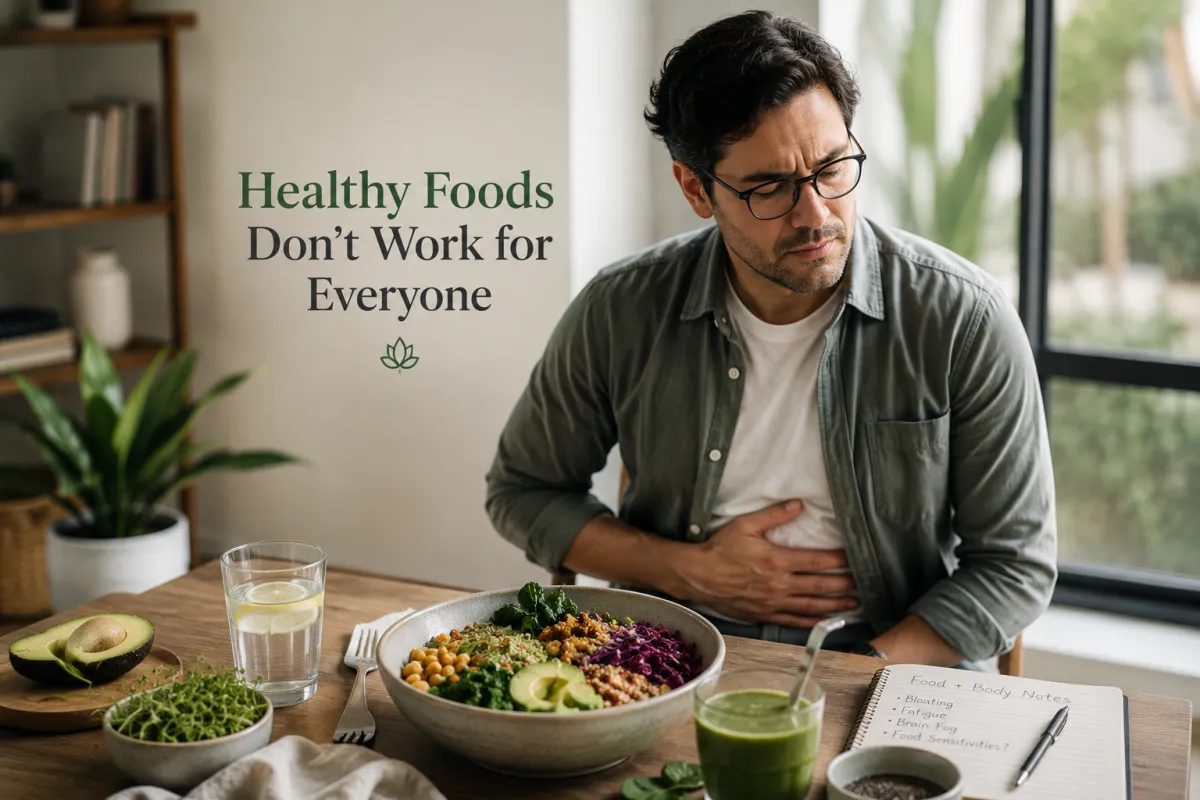
Why Some “Healthy Foods” Make You Feel Worse in Lakewood Ranch
The Hidden Reason Behind Bloating, Fatigue, and Food Sensitivity
A lot of people are trying harder than ever to eat healthy.
They switch to smoothies, oatmeal, salads, protein bars, raw vegetables, gluten-free snacks, and “clean eating” plans.
But instead of feeling better, they feel worse.
They become:
Bloated
Tired after meals
Foggy
Inflamed
Gassy
More exhausted than before
And this creates confusion.
“How can healthy food make me feel unhealthy?”
At Longevity Wellness Clinic, this is something we see often in patients across Lakewood Ranch and Florida.
And the answer is usually not that the food itself is bad.
The issue is that different bodies respond differently to stress, digestion, toxins, blood sugar, and inflammation.
The same food that helps one person may overwhelm another.
Healthy Does Not Always Mean Compatible
One of the biggest myths in wellness culture is that there is one perfect diet for everyone.
But metabolism does not work that way.
Some people thrive on raw salads and smoothies.
Others feel cold, bloated, exhausted, or anxious after eating the exact same foods.
This is because digestion, nervous system function, blood sugar regulation, and detoxification are deeply connected.
Your body’s current metabolic pattern matters.
Why Digestion Changes Under Stress
One of the first systems affected by chronic stress is digestion.
When the nervous system stays in fight-or-flight mode, blood flow shifts away from digestion and toward survival.
That means:
Stomach acid decreases
Digestive enzymes decrease
Nutrient absorption weakens
Bloating becomes more common
This is why many people suddenly develop food sensitivities during stressful periods of life.
The food may not have changed.
The body’s ability to process it did.
Why Raw “Healthy Foods” Can Backfire
Many people trying to lose weight or detox rely heavily on:
Smoothies
Raw vegetables
Cold salads
Protein shakes
Overnight oats
For some people, these foods feel energizing.
But for others, they create digestive stress.
Inside Traditional Chinese Medicine, digestion is viewed like a digestive fire.
Cold, raw foods can weaken that fire in already depleted individuals.
This often leads to:
Bloating
Gas
Loose stools
Fatigue after eating
Cravings shortly after meals
This pattern is commonly seen in the Manatee archetype, where digestion and nutrient absorption become weaker over time.
The issue is not necessarily the food itself.
It is whether the digestive system has enough strength to process it efficiently.
Why Oatmeal and “Clean Foods” Are Not Always Simple
Many people assume foods like oatmeal are automatically healthy.
But some foods carry hidden burdens most people never think about.
Even healthy foods may contain:
Pesticide residues
Glyphosate
Heavy metals
Mold toxins
Inflammatory compounds
For sensitive individuals, these hidden stressors can contribute to:
Brain fog
Digestive irritation
Fatigue
Inflammation
Hormone disruption
Some people feel significantly better simply by changing the quality, preparation, or frequency of certain foods.
This is especially important in people already dealing with liver congestion, immune stress, or chronic inflammation.
Why Blood Sugar Changes How Foods Feel
Another reason healthy foods may backfire is blood sugar instability.
For example, someone with insulin resistance may feel worse after:
Large fruit smoothies
Oat-heavy breakfasts
Granola
Juice cleanses
High-carb “healthy” snacks
Even though these foods are marketed as healthy, they may create major glucose spikes in certain metabolic patterns.
This often leads to:
Crashes after meals
Increased hunger
Sugar cravings
Fatigue
Irritability
This is commonly associated with the Walrus archetype, where the body struggles to regulate glucose efficiently.
Food Sensitivities Are Not Always Permanent
This is important.
Many people become afraid of food because they react poorly to so many things.
But in many cases, the problem is not permanent intolerance.
The body is simply overwhelmed.
When digestion, stress regulation, blood sugar, and inflammation improve, food tolerance often improves too.
This is why the goal is not endless restriction.
The goal is rebuilding resilience.
Why “Healthy Eating” Becomes Stressful
One of the saddest things we see is people becoming afraid of eating.
They try:
Elimination diets
Extreme detoxes
Aggressive fasting
Cutting more and more foods
But sometimes this creates even more stress on the body.
Especially in people with chronic stress patterns, aggressive restriction can worsen fatigue, hormone imbalance, and nervous system dysregulation.
The body begins feeling unsafe around food.
And that often increases symptoms even further.
The Decode Your Dolphin Approach
Inside the Decode Your Dolphin system, we do not just ask:
“What foods are healthy?”
We ask:
“What foods are supportive for your current metabolic pattern?”
Because different archetypes need different strategies.
For example:
Some people need warmer, cooked foods
Some need more protein stability
Some need blood sugar support
Some need liver support
Some need nervous system regulation first
This is why generic nutrition plans often fail.
The issue is not effort.
It is mismatch.
Signs Your “Healthy Foods” May Not Be Working for You
Some common clues include:
Bloating after healthy meals
Fatigue after eating
Brain fog after smoothies or carbs
Constant digestive discomfort
Feeling hungry quickly after meals
Cravings despite eating “clean”
Loose stools or gas after raw vegetables
These are signals worth paying attention to.
Your body may be asking for a different approach.
Small Changes Often Work Better Than Extreme Changes
You do not need to overhaul your life overnight.
Sometimes simple changes make the biggest difference:
Eating warmer meals
Increasing protein
Reducing ultra-processed “health foods”
Stabilizing blood sugar
Supporting digestion
Slowing down while eating
Improving sleep and stress recovery
The body usually heals better through consistency than extremes.
Your Next Step
If healthy foods seem to make you feel worse, it may be time to look deeper at your digestion, stress response, and metabolic pattern.
You can book a free 10 minute complimentary consultation with Dr Cynthia Clark through Zoom.
It is convenient, safe, and there is no need to travel.
During the consultation, you can discuss your symptoms, food reactions, digestion, energy, and metabolism to better understand what your body may actually need.
You can also take the free metabolic screening quiz at DecodeYourDolphin.com to discover your metabolic archetype and learn how your body may be responding to stress, inflammation, and nutrition.
Final Thoughts
Healthy eating is not supposed to make you miserable.
If your body reacts poorly to foods that are considered healthy, it does not necessarily mean your body is broken.
It may simply mean your metabolism, digestion, or nervous system needs a different kind of support.
Once you understand the pattern underneath the symptoms, food starts making a lot more sense again.
